On 28 July 2026 the Minister for Primary Industries announced new Queensland drought declarations and the reinstatement of Drought Carry-on Finance Loans and Emergency Drought Assistance Loans for eligible Queensland primary producers. Full details of these loans will be available once administrative arrangements are finalised. Please monitor QRIDA’s website and social media channels for more information about when these loans will open to application and how to apply.
Page title
Regional Economic Impact
Page title
Regional Economic Impact
Text
QRIDA's First Start Loans and Sustainability Loans deliver almost seven times the economic benefit for regional Queensland communities.
Text
Flow-on economic impacts to rural and regional communities
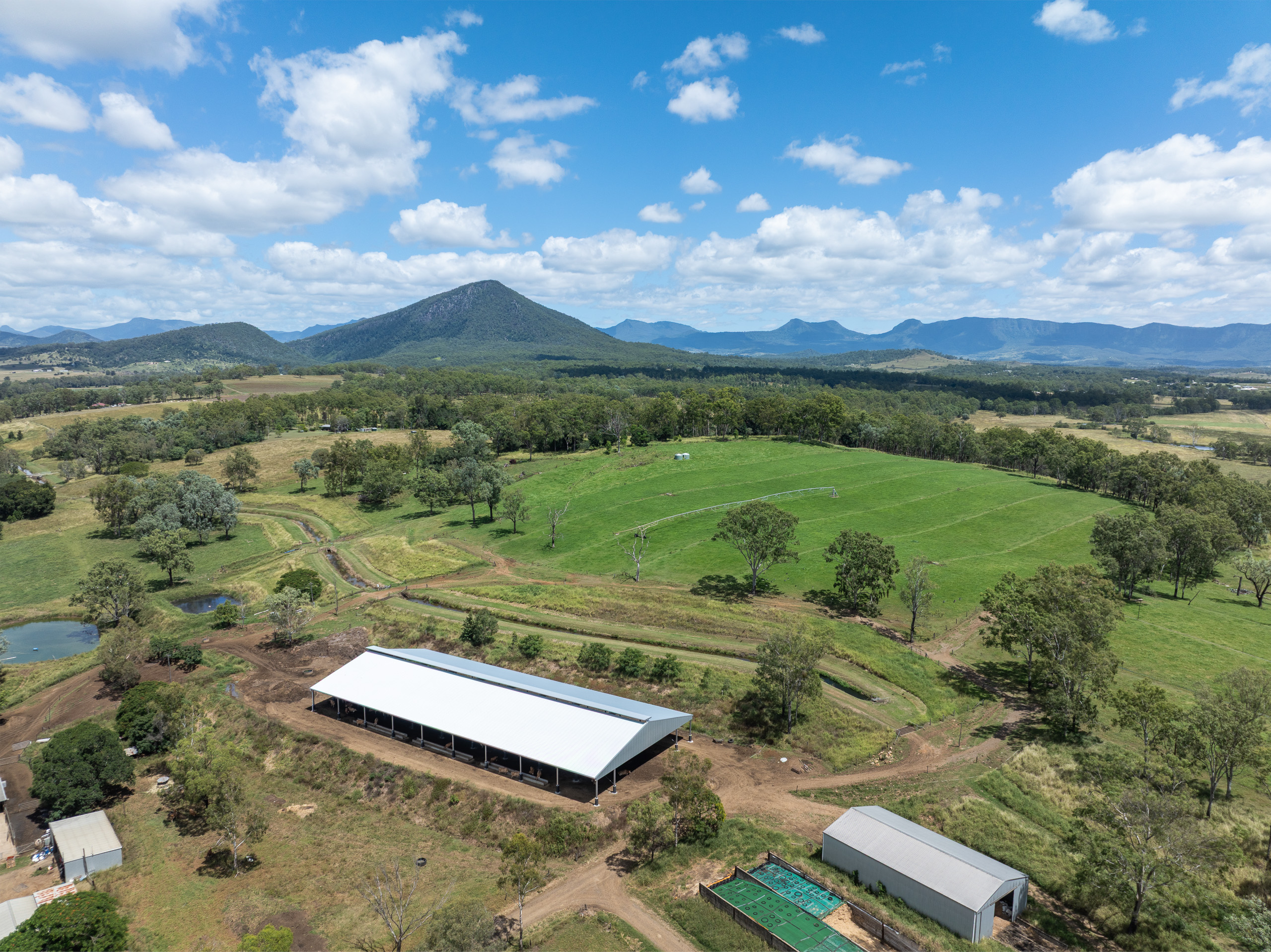
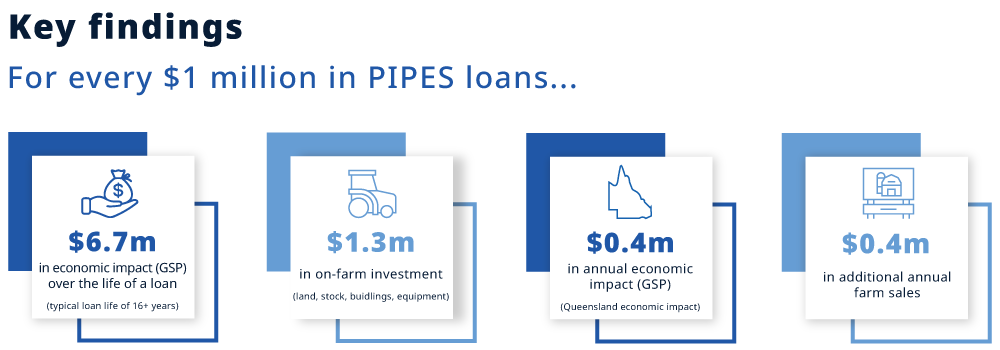
Every $1 million in loan funding provided to a primary producer through the Queensland Government’s Primary Industry Productivity Enhancement Scheme (PIPES) supports $6.7 million in regional economic activity.
Over the 30-year lifetime of the PIPES program, QRIDA has delivered $1.2 billion in concessional loans to Queensland primary producers. This 2024-25 economic impact analysis is based on the 1,368 open loan accounts worth $772.5 million.
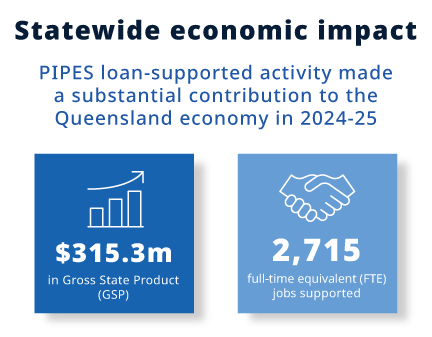
Between 2024-25, on-farm investments supported by these loans created $315.3 million in gross state product (GSP) and supported 2,715 full-time equivalent jobs.
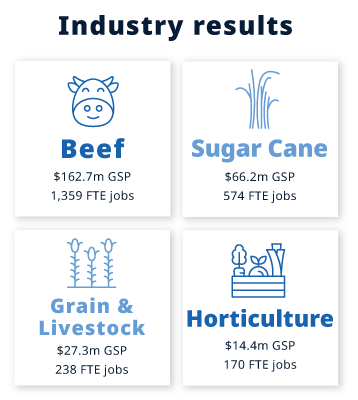
The largest economic impacts were linked to beef and sugarcane production, followed by other primary industry categories including grain and livestock, horticulture, and other farming and aquaculture.
Meanwhile, the benefits were strongest in regions with high agricultural activity, particularly Southern Coastal – Curtis to Moreton, Northern Coastal – Mackay to Cairns, and Western Downs and Central Highlands.
Text
According to the BDO PIPES Regional Economic Impact Report, 2024-25.
Methodology used in PIPES Regional Economic Impact Report
These figures have been measured by the independent PIPES Regional Economic Impact Report 2024-25.
The Report was conducted by independent advisory group, BDO, and commissioned by the Queensland Rural and Industry Development Authority (QRIDA).
The independent report measures both direct and flow-on economic impacts of on-farm investments funded under PIPES, including the concessional First Start Loans and Sustainability Loans administered through QRIDA.
The BDO methodology measured the incremental impact of PIPES lending by comparing outcomes ‘with the PIPES loan’ against ‘without the PIPES loan’, using a representative sample of the PIPES portfolio data across loan types and regions.
BDO’s RISE input–output models were used to estimate the direct impacts and flow-on effects through supply chains and household spending.
The next PIPES Regional Economic Impact Report is scheduled for 2028.